Last updated 2026-08-17
TL;DR
Alaska has no dedicated pet cremation operator license. You need a state business license, a municipal business permit, and an air quality permit from the Alaska Department of Environmental Conservation before you fire the retort. Equipment runs $30,000 to $150,000 new. Plan six to eighteen months from first paperwork to first cremation, depending on borough and equipment lead times.
Do you need a license for pet cremation in Alaska?
No. Alaska has no standalone pet cremation license and no state-level animal cremation operator certification. There is no board exam, no continuing education tied to a cremation credential, and no agency that issues a "pet crematorium license" the way some states issue funeral director licenses.
What you do need is layered, and each layer comes from a different agency.
Every person doing business in Alaska must hold a current Alaska business license from the Division of Corporations, Business and Professional Licensing (DCCED). The fee was $50 for a two-year license as of the most recent published schedule, though you should confirm the current amount with DCCED before filing [1]. The application is online and quick.
Next comes local authorization. Anchorage, Fairbanks, Juneau, and other municipalities each issue their own business licenses or zoning approvals. A cremation facility burns material and has stack emissions, so expect to deal with your borough's planning and zoning office before you sign a lease. Zoning classification matters enormously. A retort in an industrial zone clears local hurdles far faster than one in a mixed-use or commercial zone.
The step that owns your timeline is the air permit. Alaska requires one for any device that combusts material, including animal cremation retorts. The Alaska DEC Division of Air Quality administers this under 18 AAC 50, the state's air quality standards [2]. Whether you need a minor permit or a full permit depends on your retort's rated capacity and projected throughput. Most single-retort pet cremation startups qualify for a minor source permit, but confirm your specific equipment's emission profile with DEC before you assume that.
So: no cremation license, yes business license, yes air permit, yes local zoning sign-off. Three buckets, three timelines.
What are Alaska's rules for disposing of animal remains?
Alaska's solid waste and animal disposal rules apply even when you run a cremation business, because you still handle remains before and after the burn.
The Alaska Department of Environmental Conservation regulates solid waste under 18 AAC 60 [3]. Animal remains are generally classified as solid waste, and a cremation facility that stores uncremated remains on-site, even briefly, has to handle and store them in a way that meets those standards. Refrigeration requirements are not spelled out in the cremation context, but operating without refrigeration through Alaska's warmer months and then having a storage problem is the kind of thing that generates complaints and DEC inspections. Buy a commercial refrigeration unit before you take your first client.
Cremated remains (cremains) are not regulated as hazardous waste under Alaska or federal standards. Their return to clients, burial on private property, or scatter at sea follows no unusual state rule beyond the basic chain-of-custody documentation you should be keeping anyway.
Alaska also restricts open burning of animal carcasses under 18 AAC 50.065, which prohibits it except under specific exemptions [4]. This matters only if you're weighing any backup disposal method. A licensed retort is your cleanest path. Open burning is off the table for a commercial operator.
How do you get an air quality permit for a pet cremation retort in Alaska?
This is the step that surprises most people entering pet cremation in Alaska. The air permit is not hard to get for a small operator. It is slow.
Under 18 AAC 50, sources emitting below major source thresholds (generally 100 tons per year for criteria pollutants under the Clean Air Act, though Alaska sets its own thresholds) can apply for a minor source permit [2]. A single pet cremation retort running typical volumes emits well below major source thresholds. You still have to submit actual equipment specifications, expected annual throughput, and emission calculations to DEC's Division of Air Quality.
The EPA's National Emission Standards for Hazardous Air Pollutants (NESHAP) for hospital, medical, and infectious waste incinerators (40 CFR Part 63, Subpart EC) do not apply to pet cremation retorts, because pet remains are not regulated medical waste under federal rules [5]. That distinction matters. It removes a layer of federal oversight that confuses many new operators.
Budget four to eight months for the DEC air permit review once you submit a complete application. Incomplete applications restart the clock. Hire an environmental consultant to prepare the emission calculations if you're not comfortable with AP-42 emission factor methodology. It costs a few hundred to a couple thousand dollars and eliminates the most common rejection reason.
DEC's Air Quality permit forms and guidance are on the DEC website. Contact the Division of Air Quality regional office covering your area before submitting. A pre-application meeting saves time.
What does pet cremation equipment cost in Alaska, and what should you buy?
New pet cremation retorts from established manufacturers (Matthews Environmental Solutions, B&L Cremation Systems, Mopec, and others) run roughly $30,000 on the low end for a small-capacity unit to $150,000 or more for a high-throughput unit with an afterburner and emissions control package [6]. Those are national price ranges. Alaska's shipping costs add to the total. Barge freight from Seattle to Anchorage or Fairbanks, or air freight for smaller components, adds real money. Budget $3,000 to $10,000 in freight depending on your location and unit size.
Used equipment exists and can cut upfront costs a lot, but verify the unit's emission profile before buying. A used retort permitted in Texas under different state rules may not meet Alaska DEC's documentation requirements without additional testing.
For a startup, a single retort handling cats, small dogs, and medium dogs covers most of the market. Owners of very large dogs (over 100 lbs) and other large animals need a bigger chamber. Most Alaska operators starting out take large-animal jobs as overflow or refer them out, then add capacity later.
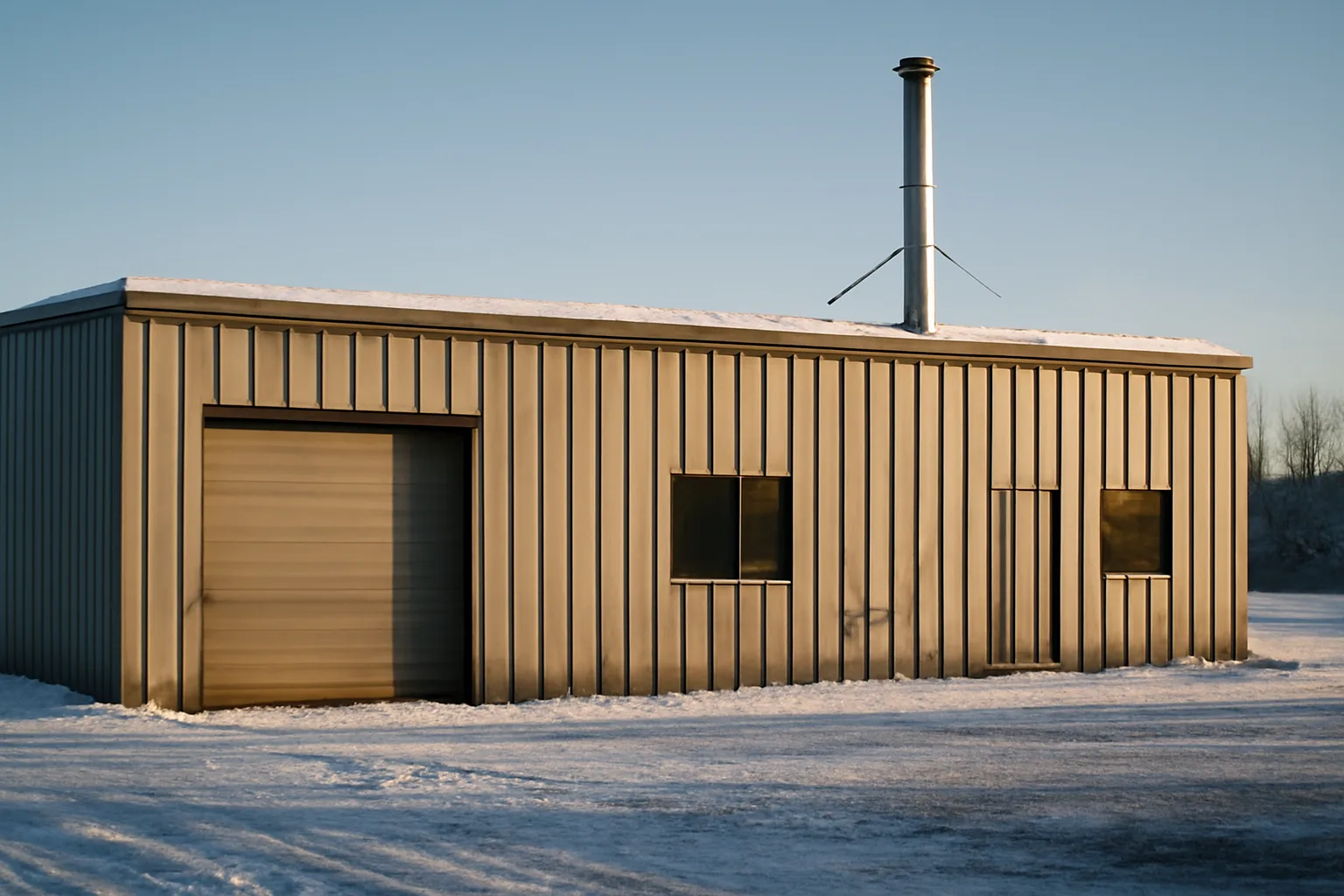
You also need a facility. Industrial or light-industrial zoning, a concrete floor that supports retort weight (these machines are heavy), ventilation that manages ambient heat, and a stack penetration through the roof or wall for the flue. Build-out costs vary widely by location and building condition. A rough budget of $20,000 to $60,000 for facility prep is reasonable, though it runs higher in remote Alaska locations where labor costs more.
On the paperwork side, the AquamationPath Retort + EPA + Vet-Partner Kit bundles the federal compliance documents, equipment spec templates, and veterinary partnership agreements into one package for $199. Worth a look before you build your application file from scratch.
How much does pet cremation cost in Alaska for end customers?
Private cremation for a cat or small dog typically runs $150 to $350 in Alaska markets, and communal cremation runs $75 to $150. Retail pricing is not published in any regulatory database, so these figures come from publicly listed prices on Alaska provider websites and industry surveys, not a centralized source. Treat them as market reference points, not guarantees.
Large dogs push private cremation toward $400 to $600 depending on weight. Remote or rural Alaska adds meaningful transport costs on top of cremation fees, because moving remains in a state with limited road access is genuinely complicated.
For context, industry surveys put the U.S. average for pet cremation at roughly $50 to $300 depending on animal size and service type, with significant regional variation [7]. Alaska runs above national averages for most consumer services, and pet cremation is no exception.
As a business owner, your pricing depends on your cost structure, local competition, and service positioning. A private cremation priced below your fully loaded cost per cremation (fuel, labor, equipment depreciation, consumables) is a pricing error, not a competitive advantage. Model your break-even before you set your price list.
| Service Type | Typical Alaska Range | U.S. National Average |
|---|---|---|
| Communal cremation | $75 - $150 | $50 - $150 |
| Private cremation (cat/small dog) | $150 - $350 | $100 - $250 |
| Private cremation (large dog 80+ lbs) | $400 - $600 | $200 - $400 |
| Transport surcharge (rural/remote) | $50 - $200+ | Minimal in most states |
How long does pet cremation take in Alaska from application to opening?
The cremation of one pet takes one to three hours depending on animal size and retort temperature. That is not the timeline that trips people up.
The business launch timeline is the real question, and it breaks down like this.
Business license from DCCED: a few days online, typically one to two weeks for processing [1].
Local business license and zoning approval: two weeks to three months depending on your municipality and whether a zoning variance is required.
DEC air quality permit: four to twelve months from complete application submission. Minor permit reviews typically run 90 to 180 days but can extend based on application quality and staff workload. Confirm current processing times with DEC directly when you apply.
Equipment lead time: new retorts from major manufacturers have lead times of eight to twenty weeks depending on model and current production schedules. Order before your permit is issued and you're gambling that the permit clears before delivery. Wait until the permit is in hand and you add those weeks to your total.
Facility build-out: two to six months depending on scope.
If you start everything in parallel and your application is complete and clean, you're looking at six to twelve months to a first cremation. If the air permit drags or you need a zoning variance, eighteen months is not unusual. Nobody has good published data on Alaska-specific cremation startup timelines. The closest comparable figures come from the environmental permit processing statistics DEC reports.
How do veterinary partnerships work for a new Alaska pet cremation business?
Veterinary clinics are your primary referral channel. In most markets, 60 to 80 percent of pet cremation volume comes through vet clinic relationships, where the clinic either picks up remains for transport to the crematorium or arranges pickup on behalf of grieving clients.
In Alaska, landing vet partnerships early matters more than in densely populated states, because the geography limits your consumer-direct reach. A vet clinic in Wasilla referring clients to you covers a much larger effective radius than a comparable clinic in a lower-48 suburb.
A vet partnership is usually a pickup and delivery agreement plus a wholesale/retail price schedule. The clinic pays your wholesale rate and either bills the client directly or passes through your retail rate. You provide pickup containers, documentation forms, and a chain-of-custody tracking system the clinic's staff can use without much training.
Get your agreement in writing. It doesn't need to be elaborate, but it should say who holds custody of remains at each stage, what your turnaround time commitment is, what happens if remains are misidentified, and how returns (cremains back to the clinic for client pickup) are handled. A vet clinic that has a bad experience with a cremain mix-up will not give you a second chance, and word travels fast in Alaska's veterinary community.
You do not need a veterinary license to run a pet cremation business, but some vets will ask whether you carry liability insurance and whether you've had formal training. Answering yes to both without hesitation opens more doors.
What insurance does an Alaska pet cremation business need?
Alaska does not mandate a specific insurance policy for pet cremation operators by statute, but you need coverage regardless.
General commercial liability insurance covering your facility and operations is the baseline. Expect $500 to $1,500 per year for a small operator depending on coverage limits and your insurer's read on cremation operations as a risk category. Some standard business liability carriers exclude cremation operations. You may need a specialty insurer or a funeral industry-adjacent carrier.
Professional liability (errors and omissions) coverage matters for a cremation business specifically, because cremain mix-ups, though rare, do happen. A mix-up that sends the wrong cremains to a grieving client can generate a large claim. Some carriers bundle this with general liability for cremation operators. Others write it as a separate policy.
If you have employees, Alaska requires workers' compensation insurance under AS 23.30 [8]. There are no exemptions for small employers in Alaska's workers' comp statute, unlike some states.
A commercial vehicle policy is needed if you do pickup and delivery with a company vehicle. Personal auto policies typically do not cover commercial transport of animal remains.
Ask your insurer directly whether they cover claims arising from misidentification of cremains. That is the specific scenario that generates the largest pet cremation liability claims.
What does the first-year operation actually look like for an Alaska pet cremation startup?
Year one is usually slower than projections. Plan for it.
Most new operators underestimate the time it takes to build vet referral relationships. A vet clinic that already works with a cremation provider, even an out-of-state or larger regional one, is not going to switch based on a cold email. You need to show up in person, bring sample documentation forms, explain your chain-of-custody process, and be willing to do a trial run or two at no charge.
In Alaska's smaller markets (anywhere outside Anchorage), the total annual volume of pet deaths that become cremations is a real constraint. The American Veterinary Medical Association estimated in its 2022 U.S. Pet Ownership and Demographics Sourcebook that roughly 67 percent of U.S. households own a pet [9]. Alaska's household count and clinic density suggest total market volume is small enough that a single-retort operator can cover significant share, but it also means growth has a ceiling without expanding services or geography.
Year-one expenses people consistently underestimate: propane or natural gas (retorts eat fuel), EPA compliance documentation time, refrigeration electricity, vehicle fuel for pickups, and the opportunity cost of time spent on vet relationship development instead of billable cremations.
The AquamationPath Retort + EPA + Vet-Partner Kit at $199 is worth a look specifically for the EPA documentation templates and vet partnership agreement drafts, which take real time to build from scratch and have to be accurate from day one.
Set a realistic volume target. In a mid-sized Alaska market, 5 to 15 cremations per week in year one is a reasonable range. Price your services to be profitable at 5 per week, and treat anything above that as accelerated payback on your equipment investment.
How does Alaska compare to neighboring states for starting a pet cremation business?
Alaska's regulatory framework is lighter than most states in one way (no dedicated cremation license) and more demanding in another (the DEC air permit process is serious).
Washington State, for example, requires a facility permit from the Washington State Department of Agriculture for animal disposal facilities under RCW 16.36 [10]. That's a full facility inspection and approval process Alaska doesn't have. Washington's air permitting for small sources can move faster in some regions, because Washington has multiple regional clean air agencies with different processing timelines.
Oregon requires registration with the Oregon Department of Agriculture for cremation of animal remains and has specific rules about cremation temperature standards, which Alaska does not codify at the state level.
Here is the honest tradeoff. Alaska's permitting is manageable, but remote logistics add cost and time that lower-48 operators don't face. Equipment shipping, facility costs in some boroughs, and a smaller total addressable market make Alaska a harder market to scale quickly. That's not a reason to avoid it, especially if you're already in Alaska, but your financial model needs to account for those realities.
To see how Alaska's structure compares to other state approaches, the pet cremation license in Alaska guide covers the licensing question in more detail, and the how to start pet cremation in Arizona and how to start pet cremation in Colorado articles show how different state licensing frameworks work in practice.
What's the step-by-step checklist for starting pet cremation in Alaska?
Here's the order that wastes the least time and money.
1. Confirm your target location's zoning allows cremation equipment operation. Do this before signing any lease or buying equipment. Talk to the municipality's planning department directly.
2. File for your Alaska business license with DCCED. Takes a week or two. Do it now, because you need the license number for other applications [1].
3. Contact DEC Division of Air Quality for a pre-application meeting. Bring your tentative equipment specs. They'll tell you which permit category applies and what the application must include.
4. Select and order your retort. Get full emission specification documentation from the manufacturer. You'll need it for the DEC application. Factor in freight lead time.
5. Submit your DEC air quality permit application with complete emission calculations. This starts the official review clock.
6. Begin vet clinic outreach. You don't need the permit to introduce yourself. You need it before you start operating. Starting early means you have referral sources ready when you open.
7. Finalize your facility build-out. Stack penetration, floor reinforcement, refrigeration, workspace for intake documentation.
8. Obtain liability and workers' compensation insurance.
9. Develop your chain-of-custody documentation system. This is the thing that separates operators who keep clients from those who lose them.
10. Once the DEC permit is in hand and equipment is installed, schedule a test run, then open for business.
For state-by-state comparisons as you research the broader landscape, see how to start pet cremation in California and how to start pet cremation in Alabama for context on how differently states structure this.
Frequently asked questions
Do you need a license for pet cremation in Alaska?
Alaska has no dedicated pet cremation operator license. You need a state business license from DCCED, local municipal permits, and an air quality permit from the Alaska DEC Division of Air Quality before operating a retort. There is no state board exam or credentialing process specific to pet cremation operators. Confirm current requirements with each agency before filing.
How much does pet cremation cost in Alaska?
Retail prices in Alaska typically run $75 to $150 for communal cremation and $150 to $600 for private cremation depending on animal size. Remote transport surcharges in rural Alaska can add $50 to $200 or more. These are market-observed ranges, not regulated rates. As a business owner, price above your break-even cost per cremation, which includes fuel, labor, equipment depreciation, and consumables.
How long does pet cremation take in Alaska?
The physical cremation of one pet takes one to three hours depending on animal size and retort operating temperature. Business launch timeline is the bigger planning question: expect six to eighteen months from first paperwork to first cremation, driven mainly by the DEC air quality permit review, equipment lead times, and local zoning approval. Permit processing times vary; confirm directly with DEC.
Does Alaska regulate animal cremation temperature?
Alaska does not set a specific cremation temperature standard in statute for pet cremation. The DEC air permit process addresses combustion efficiency and emissions rather than temperature as an end in itself. Retort manufacturers specify operating temperatures that achieve complete combustion; follow their specs and your equipment's permit conditions. Some states do codify minimum temperatures; Alaska is not one of them currently.
What zoning do you need for a pet cremation business in Alaska?
Industrial or light-industrial zoning is the most straightforward fit. Commercial or mixed-use zoning may require a conditional use permit or variance because retorts have stack emissions and operate at high temperatures. Contact your municipality's planning and zoning office before signing any lease. Anchorage, Fairbanks, Juneau, and the Matanuska-Susitna Borough each have their own zoning codes and processes.
Can you do pet cremation in rural or remote Alaska?
Technically yes, but logistics are the challenge. Equipment must be shipped by barge or air freight, which adds cost and lead time. Vet clinic referral networks are thinner in rural areas. Some operators serve rural communities through scheduled route pickup rather than fixed facilities. Air quality permitting still applies regardless of location. Remote facility costs for build-out and compliance are generally higher than Anchorage-area costs.
What permits does the EPA require for a pet cremation retort?
The EPA's NESHAP rules for hospital and medical waste incinerators (40 CFR Part 63, Subpart EC) do not apply to pet cremation retorts because pet remains are not classified as regulated medical waste. State-level air permits (administered by Alaska DEC under EPA delegation) are the operative permit. You are still subject to general Clean Air Act requirements through the Alaska state air quality program.
How do I find veterinary clinic partners in Alaska?
Start with the Alaska Veterinary Medical Association member directory to identify clinics in your target area. Cold visits are more effective than emails in this industry. Bring printed intake forms, your chain-of-custody workflow, and pricing. Offer a trial run. Clinics care most about reliability and documentation accuracy; mix-ups end relationships immediately. Build the relationship before you open, not after.
Is pet cremation profitable in Alaska?
It can be, but Alaska's smaller total market and higher operating costs require a more careful financial model than lower-48 markets. A realistic year-one volume in a mid-sized Alaska market is 5 to 15 cremations per week. Price to cover all costs at the low end of that range. Equipment payback typically runs three to six years for small operators. Vet partnership volume and private cremation upsells are the main profit levers.
Do you need workers' compensation insurance for a pet cremation business in Alaska?
Yes. Alaska Statutes AS 23.30 requires workers' compensation coverage for all employers with employees, with very limited exceptions that do not typically apply to commercial cremation operations. There is no small-employer exemption. A sole proprietor with no employees is not required to carry workers' comp for themselves, but must have it the moment any employee is hired. Confirm with the Alaska Department of Labor.
Can a pet cremation business also handle livestock or large animals in Alaska?
A standard pet cremation retort chamber is sized for companion animals up to roughly 200 to 300 lbs depending on the unit. Livestock cremation requires a larger chamber and higher throughput capacity, which affects your air permit conditions and equipment cost. If you plan to serve livestock producers, size your equipment and permit for that load from the start. Most pet cremation startups focus on companion animals only.
What records does an Alaska pet cremation business need to keep?
No Alaska statute specifies cremation record retention for pet cremation operators specifically. Best practice, and what any vet or client dispute will demand, is a chain-of-custody log for every animal that includes intake date, identification tag, weight, cremation date, retort ID, cremains weight, and return confirmation. Your DEC air permit may also require operating logs documenting combustion parameters. Retain all records for at least five years.
How do Alaska's air quality rules affect pet cremation operations?
Alaska DEC enforces air quality standards under 18 AAC 50, implementing Clean Air Act requirements. A pet cremation retort must be permitted as a combustion source. Most single-retort operations qualify as minor sources well below major source thresholds. The permit specifies allowable emissions, operating conditions, and potentially recordkeeping requirements. Violations can result in permit suspension or fines. Your permit conditions are the operating rules; read them carefully.
Sources
- Alaska DCCED, Business License Information: Every person doing business in Alaska must hold a current Alaska business license from DCCED; fee was $50 for a two-year license per published schedule
- Alaska Administrative Code, 18 AAC 50 Air Quality Control: Alaska requires an air quality permit for combustion sources including animal cremation retorts; minor source threshold and application requirements under 18 AAC 50.502
- Alaska Administrative Code, 18 AAC 60 Solid Waste Management: Alaska DEC regulates solid waste including animal remains under 18 AAC 60; cremation facilities handling pre-cremation remains must comply
- Alaska Administrative Code, 18 AAC 50.065 Open Burning: 18 AAC 50.065 prohibits open burning of animal carcasses for commercial operators except under specific exemptions
- U.S. EPA, 40 CFR Part 63 Subpart EC, National Emission Standards for Hospital/Medical/Infectious Waste Incinerators: NESHAP Subpart EC for hospital/medical/infectious waste incinerators does not apply to pet cremation retorts because pet remains are not classified as regulated medical waste
- Matthews Environmental Solutions, Cremation Equipment Products: New pet cremation retorts from major manufacturers run roughly $30,000 to $150,000 depending on capacity and emission control package
- American Veterinary Medical Association, 2022 U.S. Pet Ownership and Demographics Sourcebook: Industry surveys put the U.S. average for pet cremation at roughly $50 to $300 depending on animal size and service type
- Alaska Statutes AS 23.30, Alaska Workers' Compensation Act: Alaska Statutes AS 23.30 requires workers' compensation coverage for all employers with employees; no small-employer exemption
- American Veterinary Medical Association, 2022 U.S. Pet Ownership and Demographics Sourcebook: AVMA's 2022 sourcebook estimated approximately 67 percent of U.S. households own a pet
- Washington State RCW 16.36, Animal Disease Control: Washington State requires a facility permit from the Washington State Department of Agriculture for animal disposal facilities under RCW 16.36